Rectal bleeding or anal pain is not enough to identify piles, because fissures, fistulas and bowel conditions can produce overlapping symptoms. By the end, you will know how these conditions differ, which warning signs need prompt assessment, what a Bangalore consultation may involve, and how homeopathy compares with treatments supported by clinical evidence.
Key takeaways
- Bright-red bleeding with severe pain needs medical assessment, not self-treatment.
- Fissures usually cause sharp pain during bowel movements; piles cause swollen vascular cushions.
- Thrombosed piles form a painful clot near the anus and need prompt evaluation.
- Compare homeopathy with proven measures such as fibre, fluids, medicines, and procedures.
How Piles Differ from Fissures and Fistulas
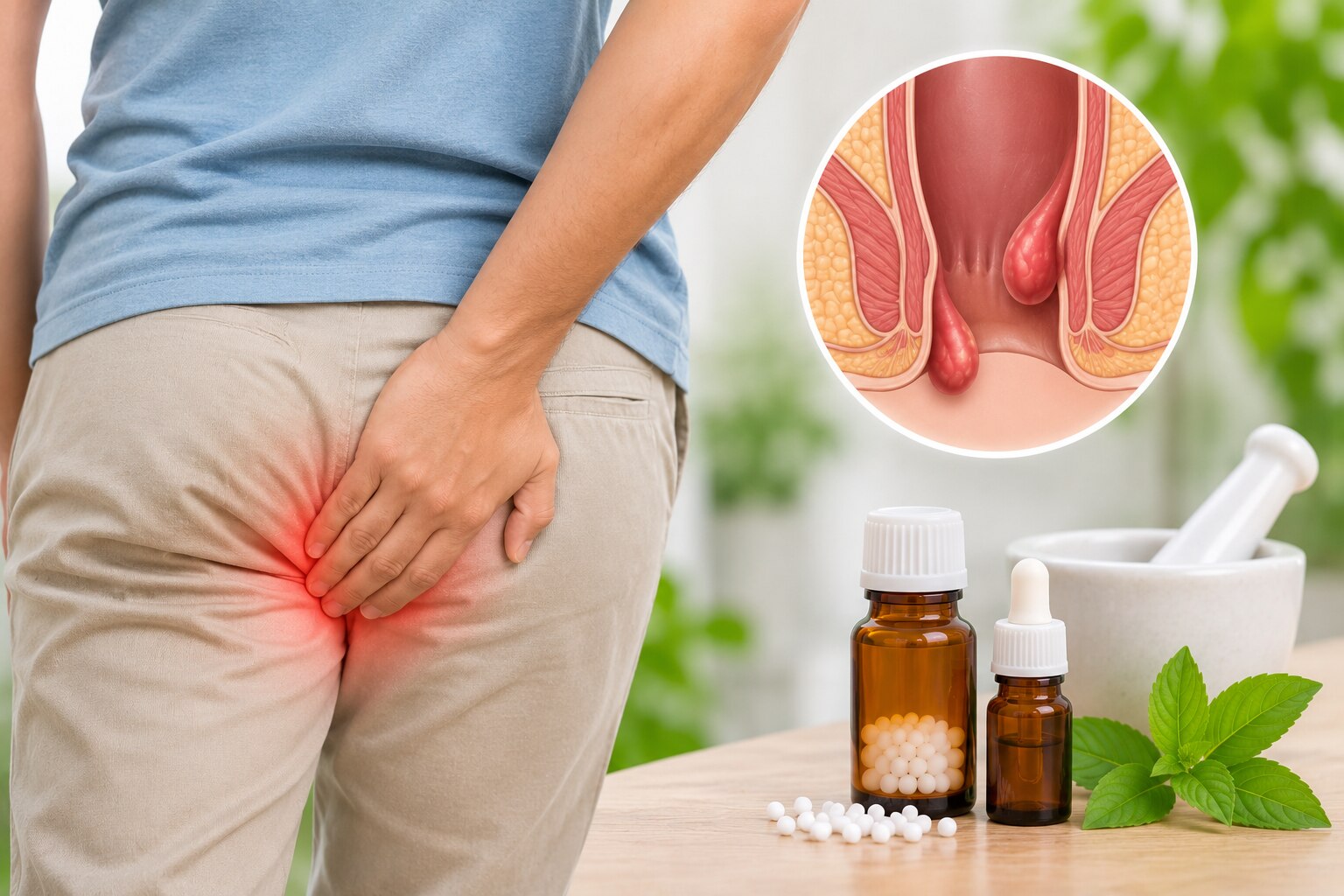
Piles and anal fissures can both cause bright-red blood, but their location and pain pattern differ. Piles means haemorrhoids: enlarged blood-vessel cushions inside the lower rectum or around the anus.
An anal fissure is a split in the thin skin lining the anal canal, while an anal fistula is an abnormal tunnel connecting the anal canal to nearby skin.
| Condition | Typical location | Main symptoms | Underlying process |
|---|---|---|---|
| Piles (haemorrhoids) | Inside the rectum or at the anal margin | Internal piles often cause painless bright-red bleeding; external piles can cause a lump, itching or pain | Swollen vascular cushions; an external clot can create sudden, severe pain and a bluish lump |
| Anal fissure | A tear at the anal opening, often toward the back | Sharp, burning pain during and after a bowel movement, with a small amount of bright-red blood | Trauma from hard stool, straining or repeated diarrhoea splits the lining and can trigger muscle spasm |
| Anal fistula | A tract from inside the anus to an opening near the skin | Persistent drainage, pus, irritation, recurrent swelling or abscess; pain increases if the opening becomes blocked | An infected anal gland forms a tunnel that usually does not heal without assessment |
Do not assume rectal bleeding is piles. Persistent, recurrent or unexplained bleeding needs medical assessment because fissures, polyps, inflammatory bowel disease and colorectal cancer can also bleed. Fever, pus, severe worsening pain or dizziness requires prompt care.
What Internal, External, Prolapsed and Thrombosed Piles Mean
Internal haemorrhoids develop inside the lower rectum, where they often cause painless, bright-red bleeding during or after a bowel movement. External haemorrhoids form under the skin around the anal opening, where swelling and touch-sensitive pain are more noticeable.
| Type | What it means | Typical bleeding, pain and lump |
|---|---|---|
| Internal haemorrhoids | Swollen vascular cushions inside the rectum | Bright-red bleeding is common; pain is usually absent unless the haemorrhoid prolapses or another problem exists. No lump is visible unless it descends. |
| External haemorrhoids | Swelling under the skin at the anal margin | A tender lump can appear, with bleeding if the surface breaks. Pain is usually stronger than with uncomplicated internal haemorrhoids. |
| Prolapsed piles | Internal haemorrhoids that bulge through the anus during straining or bowel movements | A soft lump may come out and return by itself, need gentle replacement, or remain outside. Bleeding, mucus, irritation and soreness can occur. |
| Thrombosed haemorrhoid | An external haemorrhoid containing a blood clot | A thrombosed haemorrhoid causes sudden, severe pain and a firm bluish or purple lump. Bleeding is less typical unless the skin opens. |
A painful lump does not automatically identify the cause, and rectal bleeding should not automatically be blamed on haemorrhoids. Persistent, recurrent or unexplained bleeding needs clinical assessment.
When Rectal Bleeding or Anal Pain Needs Medical Assessment
Seek urgent medical care for heavy or continuous rectal bleeding, large blood clots, faintness, dizziness, black stools, or severe anal pain with fever. Bleeding with significant abdominal pain or diarrhoea also needs prompt assessment. Fever and pus near the anus can indicate an abscess rather than uncomplicated haemorrhoids.
- A suddenly painful, bluish lump may be a thrombosed external haemorrhoid. Severe symptoms require examination because early surgical removal can sometimes relieve pain faster than waiting for the clot to resolve.
- Persistent, recurrent or unexplained bleeding needs a medical appointment, even when you have known piles.
- Unexplained weight loss, a new change in bowel habit, or increasing fatigue raises concern for a cause beyond haemorrhoids.
- Do not wait for self-care to work if pain or bleeding is rapidly worsening.
| Finding | Possible explanation | What assessment addresses |
|---|---|---|
| Bright-red bleeding with little pain | Internal haemorrhoid, anal fissure, polyp or colorectal cancer | A clinician identifies the bleeding source and checks whether bowel examination or further testing is needed. |
| Bleeding with diarrhoea or abdominal pain | Inflammatory bowel disease, infection or another gastrointestinal problem | Assessment separates bowel inflammation from an anal cause. |
| Black or dark-red stools | Bleeding higher in the digestive tract or significant intestinal bleeding | Urgent evaluation is needed; this pattern is not typical of piles. |
| Painful lump with fever or pus | Abscess, infected fistula or thrombosed external haemorrhoid | Examination determines whether drainage, surgery or other treatment is required. |
What to Expect from a Piles Consultation in Bangalore
A piles consultation in Bangalore begins with a symptom history, not an automatic diagnosis. Tell the clinician when bleeding started, its colour, amount and frequency; whether pain occurs during bowel movements; whether you feel a lump, itching, mucus or incomplete emptying; and whether you have fever, weight loss, dizziness or black stools.
Discuss your bowel habits, constipation, diarrhoea, straining, toilet time, pregnancy, previous piles, family history of bowel disease, and every medicine or supplement you use.
- Write down the dates and pattern of bleeding, pain scores, stool consistency and treatments already tried.
- Bring a list of prescription medicines, especially aspirin, warfarin, apixaban or other anticoagulants. Do not stop prescribed anticoagulation without medical advice.
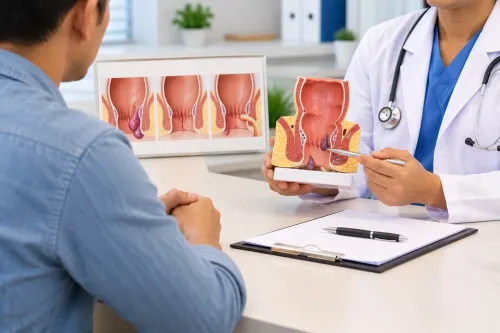
- Expect an external inspection and, when appropriate, a digital rectal examination to assess tenderness, lumps, bleeding and other abnormalities.
- Ask whether anoscopy is needed. This short examination uses a small illuminated instrument to view the anal canal and internal haemorrhoids.
- Seek prompt assessment for persistent or unexplained bleeding, heavy bleeding, black stools, severe pain, fever, pus, faintness or weight loss.
Before discussing homeopathic treatment, disclose pregnancy and breastfeeding, and check oral or topical products with a qualified clinician or pharmacist. “Homeopathic” does not guarantee safety; liquid products can contain alcohol, and delaying effective assessment can allow another cause of bleeding to go untreated. There is no reliable evidence that homeopathy treats haemorrhoids beyond placebo effects.
How Homeopathic Treatment Compares with Established Piles Care
Classical homeopathy selects a remedy from the person’s “totality”: pain quality, bleeding pattern, stool habits, triggers, general symptoms and other individual details—not simply the label piles. In classical homeopathy, practitioners then prescribe a highly diluted product and reassess the response.
This method differs from evidence-based treatment selection, and homeopathic treatment for piles has no reliable evidence of benefit beyond placebo; a detailed consultation is not proof that a remedy changes haemorrhoids.
| Option | What evidence supports it | What it can and cannot do |
|---|---|---|
| Fibre for haemorrhoids | Established first-line symptom care | Aim for about 25–35 g daily, increasing gradually with adequate fluids; it softens stools but does not remove every haemorrhoid |
| Self-care | Supported conservative management | Avoid straining and prolonged toilet sitting; use clinician-advised stool softening when needed |
| Rubber-band ligation | Established office treatment | Treats selected internal haemorrhoids, not external haemorrhoids; clinicians may also use sclerotherapy or infrared coagulation |
| Homeopathic remedy | No reliable evidence beyond placebo | Must not replace assessment or proven care; some products contain active ingredients or alcohol and can delay treatment |
If symptoms persist despite softer stools and better bowel habits, ask a clinician about office treatment rather than repeatedly changing remedies. During pregnancy, check every oral or topical product with a qualified clinician or pharmacist; “homeopathic” does not establish safety.
If you consult Raghav Homeopathy, ask how the proposed remedy was selected and which symptoms require conventional assessment.
Related service
Piles / Fistula / Fissure Piles, fistula, and fissure are common rectal disorders that can cause discomfort, pain, and other unpleasant symptoms. View service → |
Frequently asked questions
How do piles differ from fissures and fistulas?
Piles are enlarged blood-vessel cushions. Fissures are tears in the anal lining that cause sharp pain during bowel movements. Fistulas are abnormal tunnels between the anal canal and skin, often causing persistent drainage or a recurrent opening.
What do internal, external, prolapsed and thrombosed piles mean?
Internal piles develop inside the rectum, while external piles form under the skin around the anus. Prolapsed piles protrude through the anus. Thrombosed piles contain a blood clot and often cause a firm, painful lump.
When does rectal bleeding or anal pain need medical assessment?
Seek assessment for heavy or recurring bleeding, black stools, dizziness, fever, pus, severe or worsening pain, a new lump, weight loss, or a change in bowel habits. Do not assume rectal bleeding is caused by piles.
What happens during a piles consultation in Bangalore?
A clinician reviews bleeding, pain, bowel habits, medicines and medical history, then examines the anal area. They may recommend a digital rectal examination, anoscopy, blood tests or referral when another cause needs investigation.
How does homeopathic treatment compare with established piles care?
Established care includes fibre, fluids, avoiding straining, medicines for symptoms and procedures for persistent or severe piles. Evidence for homeopathy is limited, so use it only with appropriate medical assessment and do not delay proven care.