
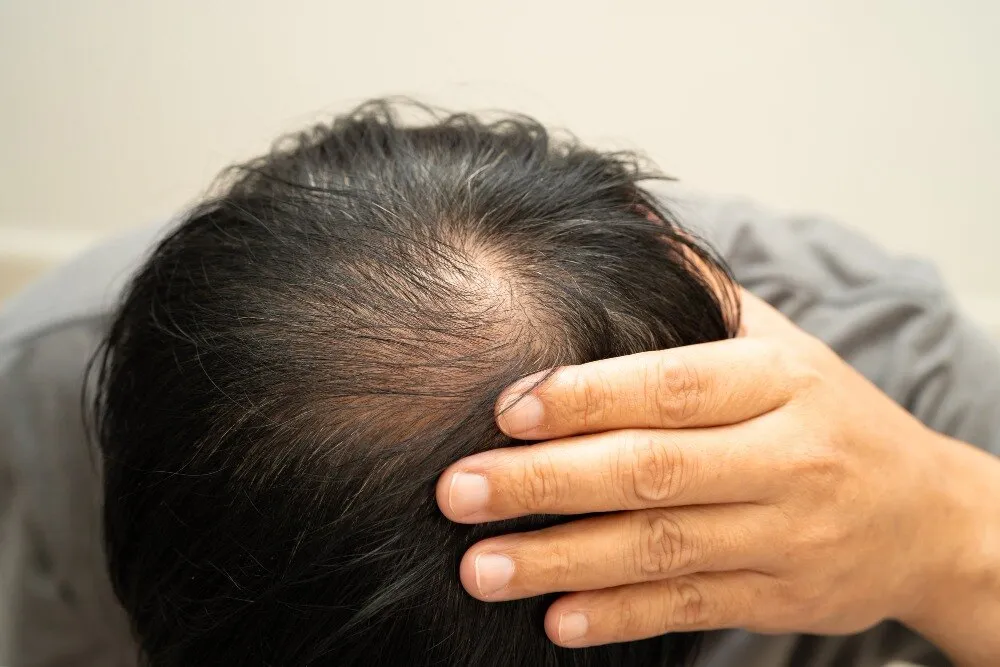
Hair loss can mean temporary shedding, broken hair, scalp inflammation, or progressive follicle miniaturisation, and each problem calls for a different next step. By the end, you will know what happens at the first consultation, which tests and records may matter, how progress is measured, and when a natural approach needs medical referral.
Key takeaways
- Bring a list of medicines, recent illnesses, diet changes, and family hair-loss history.
- Expect questions about shedding pattern, scalp symptoms, stress, childbirth, weight loss, and new medicines.
- Track progress with consistent photographs, shedding notes, and scalp-symptom changes.
- Seek prompt dermatology assessment for sudden patchy loss, scarring, pain, or inflamed scalp.
What happens at your first hair-problem consultation?
A first hair-problem consultation maps the change before any treatment is suggested. The clinician asks when it began, whether shedding is sudden or gradual, how much hair comes out, and whether it followed fever, surgery, childbirth, rapid weight loss, major stress, a new medicine, restrictive dieting, or runs in your family.
1. Describe widening part lines, receding hairlines, bald patches, itching, scaling, redness, pain, burning, tenderness, pustules, crusting, broken hairs, and texture changes. These details help separate shedding from scalp disease.
2. The clinician checks whether hairs are releasing from the root or breaking along the shaft, then examines the scalp, hair shafts, and follicular openings. A hair-pull assessment may be performed when appropriate, with possible dermoscopy to inspect follicles and scalp skin more closely.
3. The visit establishes a baseline through photographs in consistent lighting, part-width or density measurements, and notes on symptoms. This makes later comparison more reliable than counting hairs from one washing day.
For a hair fall consultation in Bangalore, bring your medicine and supplement list, recent blood-test reports, relevant menstrual or pregnancy history, and photographs showing when the problem started. You usually do not need to wash your hair immediately beforehand unless the clinic says otherwise.
Avoid heavy oils, styling products, and temporary fibres that hide the scalp. Allow enough time for history, examination, recording, and a plan—not a quick “hair fall” prescription.
How does the clinician identify the cause?
A delay of two to three months between a trigger and diffuse shedding strongly points toward telogen effluvium. The clinician matches that timeline with the pattern of loss, scalp findings, medical history, and recent changes rather than treating every case as ordinary “hair fall.”
1. Diffuse shedding after high fever, significant illness, an operation, childbirth, severe dieting, or psychological stress suggests telogen effluvium. Shedding can continue after the trigger ends because the hair cycle resets slowly.
2. Gradual widening of the part or reduced crown density in women, and frontal recession or crown thinning in men, suggests androgenetic alopecia. Dermoscopy can reveal follicle miniaturisation, where individual hairs become progressively finer.
3. Sharply defined smooth patches, eyebrow or eyelash loss, or nail pitting raises alopecia areata. Itching, greasy scale, redness, broken hairs, pustules, or contact with an affected child points toward dandruff or seborrhoeic dermatitis, fungal infection, or another inflammatory disorder.
The history also covers thyroid disease, iron deficiency, PCOS, menopause, medicines, and nutritional restriction. For someone seeking hair problem treatment in bangalore, the clinician may choose targeted tests rather than ordering every “hair test.”
- Complete blood count and ferritin or iron studies when anaemia or iron deficiency is possible
- Thyroid-stimulating hormone when thyroid disease is suspected
- Vitamin B12, vitamin D, or fasting glucose when symptoms and diet indicate a need
- Hormone testing when periods are irregular or signs of androgen excess appear
Do not start supplements without documented deficiency. Excess vitamin A or selenium can worsen hair loss, while high-dose biotin can interfere with thyroid and cardiac laboratory tests.
What treatment plan might follow a homeopathy consultation?
A plan should follow a detailed review, not the label “hair fall.” The clinician discusses your complaint, timing, associated symptoms, medical history, medicines, sleep, stress, diet, menstrual or hormonal history, and previous treatments before selecting an approach. Ask for written instructions, a review date, and clear next steps if nothing changes.
Between visits, track:
- Daily shedding impressions and washing-day changes
- Itching, scale, redness, pain, or burning
- Patch size, part width, or visible density
- Photographs in consistent lighting and from the same angles
- New symptoms, medicines, illness, or menstrual changes
| Finding | What it means | Appropriate next step |
|---|---|---|
| Unclear diagnosis | The cause has not been established | Dermatology referral before prolonged treatment |
| Rapid or patchy loss | Alopecia areata, infection, or another disorder needs assessment | Prompt medical review |
| Inflamed scalp or systemic symptoms | Pain, pustules, crusting, fever, fatigue, or weight change needs investigation | Do not rely on homeopathy alone |
| Smooth shiny areas or missing follicular openings | Scarring alopecia can permanently destroy follicles | Urgent dermatology assessment |
A clinic offering homeopathy hair treatment HSR Layout, including Raghav Homeopathy, should explain these limits and maintain a referral pathway. Hair problems homeopathy in Bangalore has no good-quality evidence showing that homeopathic remedies regrow hair or treat androgenetic alopecia, alopecia areata, thyroid disease, iron deficiency, or scarring alopecia.
Natural hair problem treatment is not automatically safer. Essential oils, herbal mixtures, onion juice, tight styles, extensions, vigorous massage, heat, and chemical processing can cause dermatitis, breakage, traction loss, or delayed diagnosis. Suspected scalp ringworm, especially in children, requires diagnosis and systemic antifungal treatment, not oils or homeopathic remedies.
Related service
Hair Problems Our hair treatments are tailored to your individual needs and may include: Scalp Examination: We examine your scalp to determine the underlying... View service → |
How long does improvement take, and how is it measured?
Do not judge visible regrowth after a few days. After the first visit, improvement depends on the diagnosis and your consistency: daily treatment, regular scalp care, prescribed medication or supplements, and follow-up visits scheduled for the treatment plan.
A hair fall consultation in Bangalore should set a review point that matches the suspected condition, not promise rapid results.
Record these changes separately rather than calling every change “regrowth”:
- Shedding: fewer hairs on washing days or on your pillow
- New short hairs: fine growth along the part, hairline, or a bald patch
- Density: stable or improved part width and crown coverage
- Scalp health: less itching, scaling, redness, pain, or inflammation
- Patch size: the measured diameter of a defined bald area
Take photographs from the same distance, in the same lighting, with the same parting position. Add notes about shedding, part width, crown coverage, patch size, and scalp symptoms. This baseline prevents normal day-to-day variation from being mistaken for treatment failure.
Telogen effluvium can continue for several months after fever, illness, childbirth, dieting, or stress has ended because the hair cycle resets slowly; density then improves gradually when follicles remain healthy. Pattern hair loss needs a longer evaluation period. Topical minoxidil requires continued use to maintain benefit, and shedding can increase at first.
Review natural hair problem treatment only after enough time has passed for the diagnosis, but seek earlier review if loss accelerates, new patches appear, or warning symptoms develop.
When does hair loss need prompt dermatology assessment?
Temporary shedding and follicle miniaturisation require different levels of urgency.
| Pattern | What you may notice | Why timing matters |
|---|---|---|
| Temporary shedding | More hairs release from living follicles after fever, surgery, childbirth, rapid weight loss, severe stress, or a new medicine | Removing the trigger can allow gradual recovery, but visible improvement takes months |
| Follicle miniaturisation | Finer hairs, a widening part, reduced crown density, or a receding hairline | Progressive thinning can become difficult to reverse, so early assessment helps protect remaining density |
Seek prompt dermatology review for rapid loss, patchy loss, an inflamed scalp, eyebrow or eyelash involvement, systemic symptoms, or an unclear diagnosis. This decision rule applies whether you are arranging hair problem treatment in Bangalore or booking a hair fall consultation in Bangalore.
Pain, burning, marked tenderness, pustules, crusting, heavy scale, shiny scar-like skin, or missing follicular openings can signal inflammatory or scarring alopecia. A destroyed scarred follicle cannot regrow hair, so prolonged self-treatment with oils, supplements, or homeopathic remedies is unsafe.
Sharply outlined smooth patches need assessment for alopecia areata, not a generic growth supplement. Children with scalp scaling and broken hairs need evaluation for ringworm; untreated infection can spread to household contacts and cause temporary or permanent loss. Prompt referral prevents months spent on an unsuitable plan while a treatable cause progresses.
Frequently asked questions
What happens at a first hair-problem consultation?
The clinician reviews when the problem began, whether shedding is sudden or gradual, how much hair you lose, and possible triggers such as fever, surgery, childbirth, stress, weight loss, restrictive dieting, medicines, or family history.
How does a clinician identify the cause of hair loss?
They compare the shedding pattern with your history and examine the scalp for signs such as scaling, redness, inflammation, broken hairs, patchy loss, or scarring. They may recommend medical evaluation or tests when the history suggests an underlying condition.
What treatment plan might follow a homeopathy consultation?
A plan may include an individualized homeopathic approach, scalp-care guidance, nutrition and lifestyle review, and follow-up appointments. Ask what improvement will be measured and when the plan will be reassessed.
How long does improvement take, and how is it measured?
Hair changes take time because growth is slow. Measure progress using photographs taken in the same lighting and angle, shedding notes, hair-density changes, and changes in itching, scaling, or scalp discomfort.
When does hair loss need prompt dermatology assessment?
Arrange prompt dermatology assessment for sudden or rapidly worsening loss, smooth patches, scarring, scalp pain, pus, marked redness, severe scaling, or hair loss with other new symptoms.
Keywords