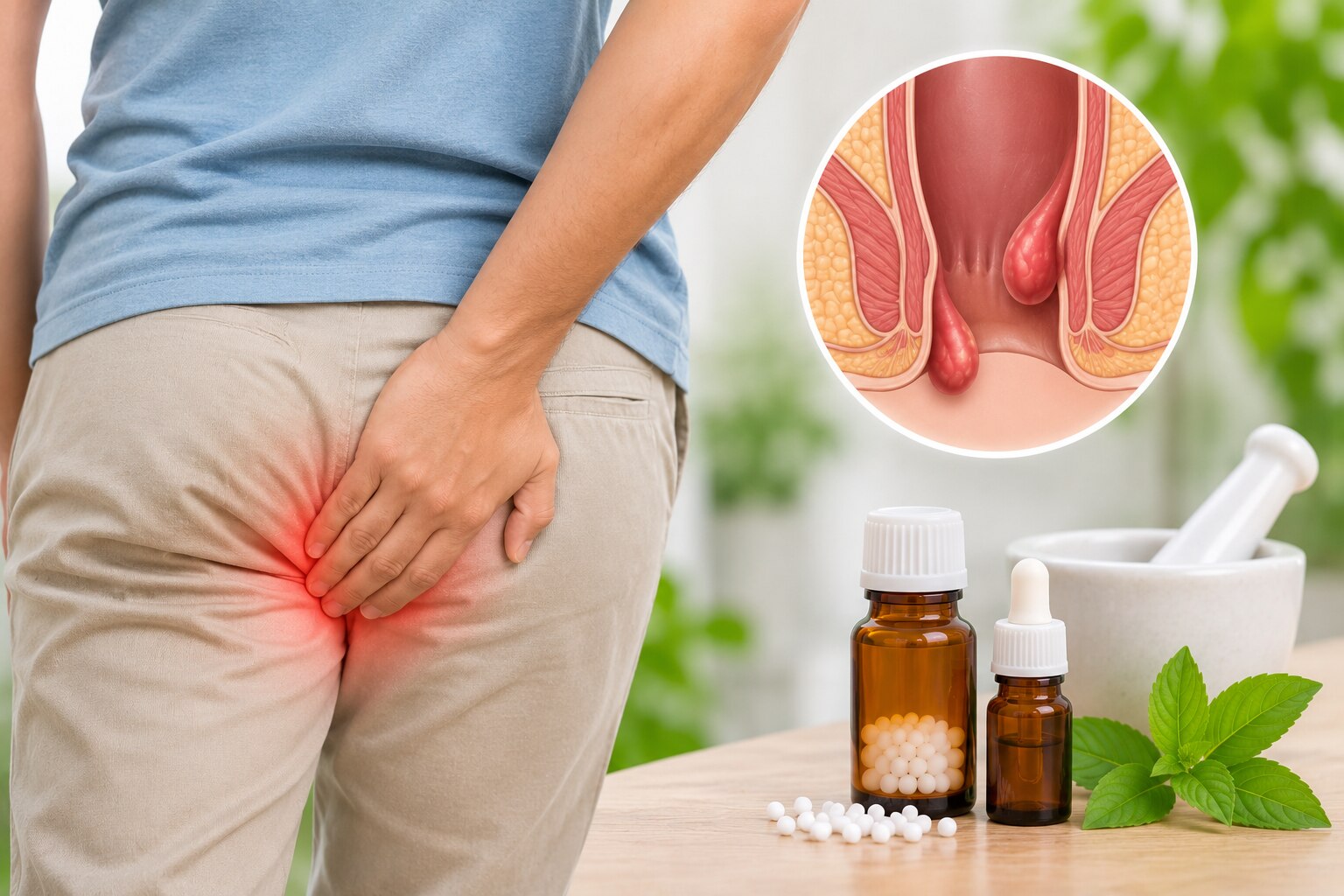
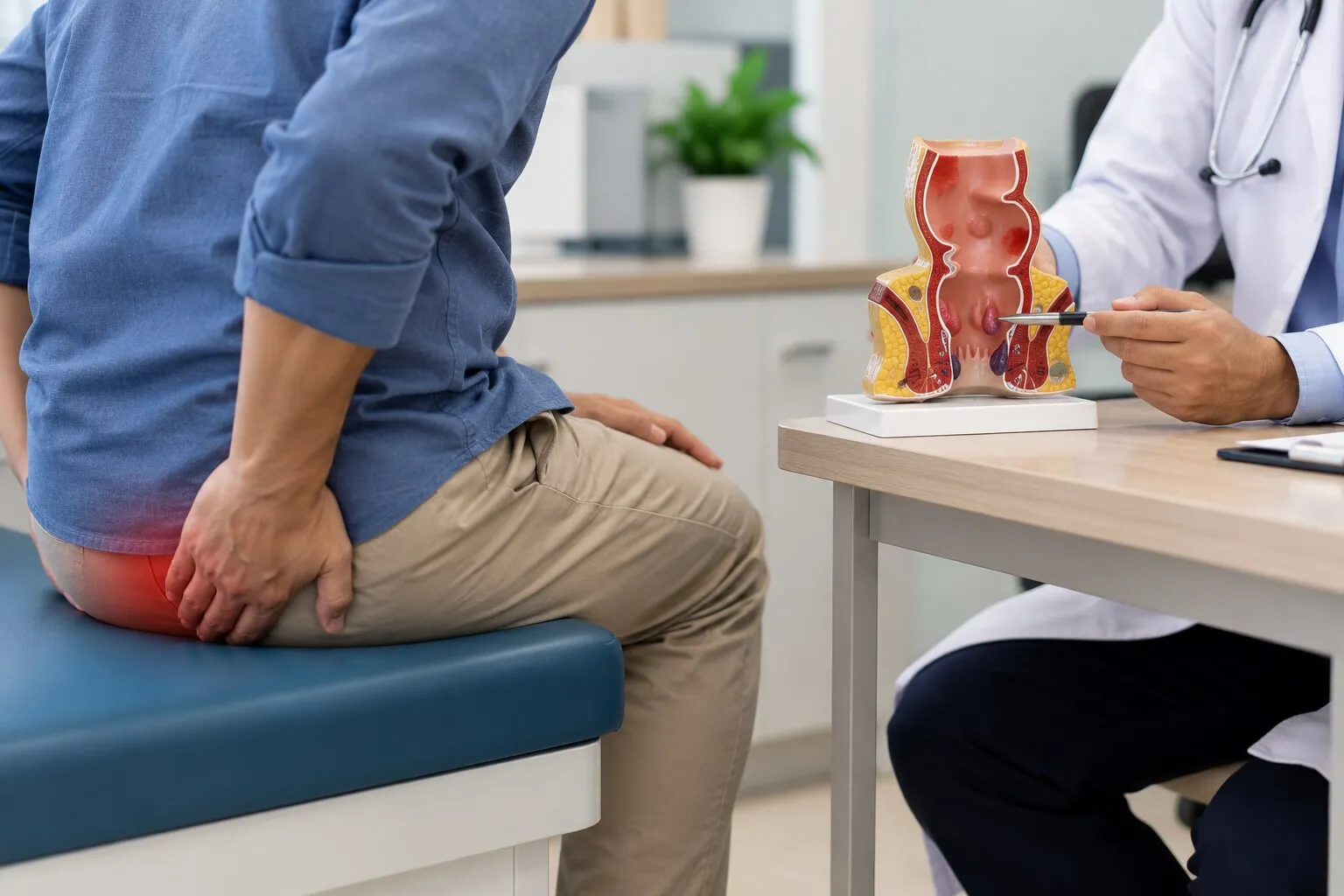
Anal pain or rectal bleeding can come from a minor tear, but the same symptoms can also signal infection, inflammatory bowel disease, medication-related bleeding, or a bowel condition that needs prompt investigation. You will learn how to recognise emergency warning signs, distinguish common symptom patterns without self-diagnosing, prepare for an examination, and choose the right level of care.
Key takeaways
- Bright-red blood does not confirm piles; fissures, fistulas, and other causes need assessment.
- Seek emergency care for heavy bleeding, faintness, severe pain, fever, or black stools.
- Record bleeding colour, timing, pain, bowel changes, medicines, and previous diagnoses.
- Choose a clinician who examines the cause rather than promising one diagnosis immediately.
Why anal bleeding cannot be safely labelled as piles
Bright-red blood does not prove you have piles. Any search for anal pain and bleeding treatment in Bangalore should begin with an examination, because the same colour can come from several conditions.
| Cause | Clues that can occur | Why assessment matters |
|---|---|---|
| Internal hemorrhoids | Painless bright-red blood on paper or in the bowl | Hemorrhoids may coexist with another cause |
| Anal fissure | Sharp pain during and after a bowel movement; a small blood streak | Atypical or multiple fissures need investigation |
| Constipation-related trauma | Hard stool, straining, soreness, surface blood | Repeated injury can maintain bleeding |
| Abscess | Constant or throbbing pain, swelling, possible fever | Infection often needs urgent drainage |
| Fistula | Recurrent swelling, pus, or blood-stained discharge | Persistent tracts may need imaging or surgery |
| Inflammatory bowel disease | Recurrent blood, diarrhoea, cramps, urgency | Treatment differs from piles treatment |
| Polyps or colorectal cancer | Blood mixed with stool, altered bowel habits, weight loss | Early bleeding can be painless |
| Sexually transmitted infection | Pain, sores, discharge, or bleeding after exposure | Testing and targeted treatment are needed |
| Medication-related bleeding | Bleeding after starting aspirin, warfarin, apixaban, rivaroxaban, or clopidogrel | Do not stop prescribed medicine without advice |
Seeing hemorrhoids does not prove they caused all the bleeding. Arrange assessment when blood is mixed through stool, bowel habits change, weight loss is unexplained, or episodes keep returning; painless bleeding is not automatically harmless.
When anal pain or bleeding needs emergency care
Go to an emergency department for heavy or continuous bleeding, black or tarry stool, maroon stool, fainting, marked dizziness, confusion, weakness, or signs of shock such as clammy skin, rapid breathing, or a racing pulse.
Seek urgent assessment for severe anal pain, especially with fever, rapidly increasing swelling, pus, vomiting, or abdominal pain. These features can indicate an abscess or another serious condition that needs prompt treatment.
- Treat these as emergency warning signs: bleeding that soaks the toilet or keeps flowing, collapse or near-fainting, new confusion, severe weakness, or cold and clammy skin.
- Do not wait for a routine appointment if anal pain is worsening quickly or swelling is enlarging over hours.
- Go urgently when pain occurs with fever, pus, repeated vomiting, or abdominal pain.
A routine appointment suits a small, single episode with no warning signs, provided the bleeding stops and does not persist or recur. Painless bleeding is not automatically harmless; delaying care because it does not hurt can postpone evaluation for bowel disease or significant blood loss.
If you search for anal pain and bleeding treatment in Bangalore or a piles doctor in Bangalore, choose assessment before a presumed piles remedy. Persistent, recurrent, or unexplained bleeding needs medical review even when you feel well.
What to record before your consultation
A short symptom record helps the clinician decide whether you need examination, blood tests, imaging, endoscopy, or urgent referral. Write it down rather than relying on memory.
1. Record the date symptoms began, whether they have returned, and whether bleeding is bright red, dark, maroon, or black.
2. Note where the blood appears: on toilet paper, coating the stool, dripping into the bowl, or mixed through the stool.
3. Describe pain during a bowel movement and how long it continues afterward. Record constipation, hard stools, straining, discharge, pus, fever, swelling, abdominal pain, vomiting, weight loss, and any change in bowel frequency or stool shape.
4. List every medicine and supplement you take, including aspirin, warfarin, apixaban, rivaroxaban, clopidogrel, steroids, and other blood-thinning or anti-inflammatory medicines. Include previous bleeding episodes, anal procedures, colon investigations, and treatments.
5. Write down any family history of colorectal cancer or bowel disease. Mention relevant sexual exposure when infection is possible; this helps the clinician choose appropriate tests without guesswork.
Take the record to an appointment for fissure treatment in Bangalore or a fistula consultation in Bangalore. Include photographs only if a clinician requests them, and do not delay urgent care for documentation.
What an examination may involve—and what self-care can cover
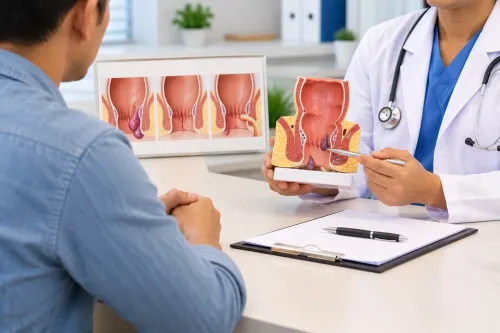
A proper assessment starts with your symptom history and an inspection of the skin around the anus. When appropriate, the clinician may perform a digital rectal examination and use anoscopy to view the anal canal.
Blood tests can check for anaemia or infection. Stool testing, colonoscopy, gastroenterology referral, or surgical assessment depends on your age, risk factors, examination findings, and bleeding pattern—not simply on whether hemorrhoids are visible.
For mild symptoms without warning signs, focus on measures that reduce trauma:
- Drink enough fluid to keep stools soft.
- Increase fibre gradually toward roughly 20–35 grams daily.
- Avoid straining and long periods sitting on the toilet.
- Clean gently with water; avoid vigorous wiping and perfumed products.
- Try warm baths for comfort.
Stop self-treatment and arrange medical care if bleeding persists or worsens. Do not insert unverified remedies, or use steroid or numbing creams for prolonged periods without an examination. An abscess often needs drainage, while a chronic fissure or fistula may need specialist treatment rather than creams alone.
If you are seeking fissure treatment in Bangalore, choose a clinician who can examine the anorectal area and arrange referral when needed. A fistula consultation in Bangalore should assess recurrent swelling, pus, or blood-stained discharge and determine whether MRI or surgery is required. Topical treatment alone does not reliably heal a fistula.
How to choose the right care in Bangalore
Choose a clinician who examines the anorectal area before suggesting anal pain and bleeding treatment in Bangalore. The same symptom may need stool-softening treatment, urgent abscess drainage, colonoscopy, or a surgical or gastroenterology referral.
| Pattern | Care decision |
|---|---|
| Painless bright-red bleeding | Ask a piles doctor in Bangalore to confirm the source before accepting medicine or a procedure. |
| Sharp pain during and after stool passage | A fissure treatment in Bangalore may involve stool-softening measures and prescription treatment after examination. |
| Recurrent swelling, pus, or blood-stained discharge | A fistula consultation in Bangalore should assess whether MRI and surgery are needed. |
| Severe pain with fever or rapidly increasing swelling | Seek urgent care for possible abscess; do not wait for routine treatment. |
- Will you inspect the area and perform a digital rectal examination or anoscopy when appropriate?
- What findings would lead to colonoscopy, blood tests, gastroenterology referral, or surgical assessment?
- Will you investigate unexplained or recurring bleeding before recommending a procedure or medicine?
Raghav Homeopathy can be considered only within an informed consultation, never as a substitute for examination, emergency care, abscess drainage, colonoscopy, or evidence-based treatment. Homeopathy has little reliable evidence for bleeding, infection, fissure, fistula, inflammatory bowel disease, or suspected cancer. Persistent or unexplained symptoms need appropriate medical evaluation first.
Heavy bleeding, black or maroon stool, fainting, severe weakness, fever, vomiting, or abdominal pain require emergency care.
Related service
Piles / Fistula / Fissure Piles, fistula, and fissure are common rectal disorders that can cause discomfort, pain, and other unpleasant symptoms. View service → |
Frequently asked questions
Why can’t bright-red anal bleeding be safely labelled as piles?
Bright-red blood can result from piles, anal fissures, fistulas, infection, inflammation, or other conditions. An examination is needed to identify the cause.
When does anal pain or bleeding need emergency care?
Seek emergency care for heavy or persistent bleeding, faintness, severe or rapidly worsening pain, fever, black stools, or weakness.
What should I record before an anal pain or bleeding consultation?
Record the blood colour and amount, when it appears, pain severity, bowel changes, fever, medicines, and previous diagnoses or procedures.
What may an examination for anal pain or bleeding involve?
A clinician may review your symptoms, inspect the area, perform a gentle rectal examination, and recommend tests when the findings require them.
How do you choose care for anal pain or bleeding in Bangalore?
Choose a qualified clinician who explains the likely causes, examination, treatment options, warning signs, and when specialist or emergency referral is needed.
Keywords